
FSH UIN Jakarta Holds Public Discussion on Trust Day, Addressing Protection of Constitutional Rights of Belief Adherents
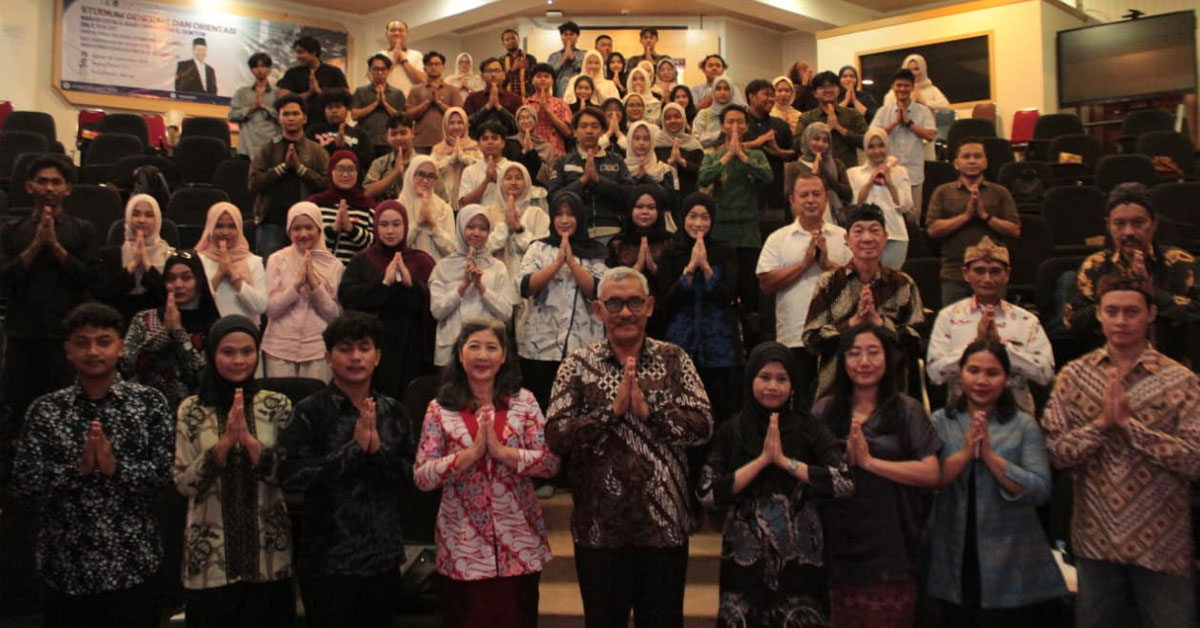
FSH News, Theater Room 2nd Floor — The Student Association of the Constitutional Law (Siyasah) Study Program, Faculty of Sharia and Law (FSH) UIN Syarif Hidayatullah Jakarta, in collaboration with Distrik Institute, organized a Public Discussion on Trust Day with the theme “Belief as Cultural Heritage: Considering State Legal Politics and Protection of Constitutional Rights of Belief Adherents.” The event took place at the Theater Room, 2nd Floor, FSH UIN Jakarta, on Thursday, September 10, 2026.
The discussion featured three speakers representing belief adherents, government, and academia: Endang Retno Lastani (Presidium of the Central Council of Luhur Kepercayaan Indonesia), Sjamsul Hadi, M.M. (Director of Belief in God Almighty and Indigenous Communities, Ministry of Culture of the Republic of Indonesia), and Nurlaili Rahmawati (Lecturer in Constitutional Law, FSH UIN Jakarta).
The event was opened by Prof. Kamarusdiana, M.H., Vice Dean for Student Affairs, Alumni, and Cooperation. In his remarks, he emphasized that Indonesia is a pluralist nation with diverse religions, beliefs, cultures, and traditions that have long coexisted peacefully.
“Indonesia is a pluralist country. Diversity of religion, belief, culture, and tradition is part of the nation’s identity that must be preserved and respected,” said Prof. Kamarusdiana.
Key Highlights from the Discussion
-
Recognition of Belief Adherents Endang Retno Lastani explained that state recognition of belief adherents has progressed significantly, including the ability to list Belief in God Almighty on official identity documents such as ID cards. This recognition reduces discrimination in employment and public services.
-
Historical Roots of Trust Day Sjamsul Hadi outlined the background of July 13 as Trust Day, referring to the BPUPKI session in 1945 when Mr. Wongsonegoro proposed adding “and belief” to the constitutional foundation. He stressed that Trust Day should be more than ceremonial, serving as a moment to strengthen protection and recognition of belief adherents.
-
Constitutional and Legal Framework Nurlaili Rahmawati highlighted that protection of belief adherents is firmly rooted in Indonesia’s legal system, citing Articles 28 and 29 of the 1945 Constitution, the Human Rights Law (No. 39/1999), ICCPR ratification (Law No. 12/2005), and Constitutional Court Decision No. 97/PUU-XIV/2016. She noted that 2026 marks ten years since the landmark ruling, making it a reflective moment to assess its impact.
“Ten years after Constitutional Court Decision No. 97/PUU-XIV/2016 is a reflective momentum to evaluate the recognition and protection of belief adherents’ constitutional rights,” explained Nurlaili.
She emphasized that normative recognition must be followed by real implementation, ensuring equal access to education, employment, public services, politics, and culture.
Broader Implications
The discussion revealed that issues of belief adherents intersect with cultural heritage, constitutional law, human rights, civil administration, and state legal politics. Perspectives from communities, government, and academia complemented each other, showing both progress and ongoing challenges.
Rahmat Ferdian, M.H., advisor to Distrik Institute and HMPS HTN (Siyasah), noted that the forum provided an academic and public space to discuss constitutional issues, bridging perspectives of students, academics, government, and communities in building democracy and a rule-of-law state that respects diversity.
The Public Discussion on Trust Day is expected to strengthen awareness among students and society about the importance of respecting diverse beliefs and fostering an inclusive, non-discriminatory, and just constitutional system in Indonesia.